
Implant Supported Dentures
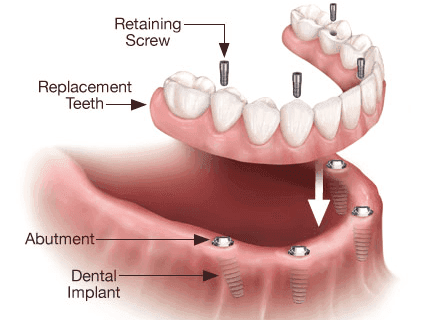
One extremely popular use for dental implants is to retain loose and ill-fitting dentures, holding them firmly in place so they cannot move. The denture has special attachments on its fitting surface, which is the surface closest to the gums, and these clip firmly to the dental implants either directly onto the implants or onto a bar that is attached to the dental implants.
It is a popular treatment in Brooklyn dental centers that has benefited many people, creating a secure foundation for those missing all their upper or lower teeth or who are entirely edentulous.
Why Choose Dental Implants?
Implant dentures are a cost-effective solution for providing basic stability to a denture. Often, teeth implants are situated towards the front of the mouth, maximizing the use of the jawbone, where it is naturally thicker and stronger. People receiving this treatment can often receive their implant dentures on the same day as treatment. Although you will still have a removable prosthesis, it is held firmly in place by dental implants and can significantly improve your ability to eat, speak, and talk comfortably and without embarrassment.
After natural teeth are lost, the bony ridge that once supported them can gradually change in height and width. These changes may reduce the stability and retention of a denture over time.
As the shape of the jaw changes, a denture may become looser and move during eating, speaking, or other everyday activities. This can make the denture less comfortable to wear and may affect a person’s confidence in social situations. In some cases, difficulty eating or concern about denture movement can also interfere with normal daily activities.
Who Is Suitable for Denture Implants?
Denture implants sometimes called an implant overdenture, are suitable for many people who may have lost teeth years ago and who have suffered significant jawbone loss. These people may need substantial bone grafting for other dental implant treatments, and which can increase the overall cost.
During the initial consultation, the dentist can review the available treatment options, discuss what the procedure involves, and determine whether an implant-supported denture may be suitable for your needs. A preliminary cost estimate may also be provided. A more accurate treatment plan and fee can usually be determined after the necessary examinations, imaging, and diagnostic tests have been completed.
Diagnostic Tests
 A cone beam CT (CBCT) scan may be used as part of the planning process for dental implant treatment. Additional dental X-rays, impressions, digital scans, or photographs may also be taken to evaluate oral health and assist with treatment planning.
CBCT imaging provides detailed three-dimensional views of the teeth, jawbone, and surrounding structures. These images can help the dentist evaluate the amount and quality of available bone, determine appropriate implant locations, and identify nearby anatomical structures such as nerves, blood vessels, and sinus cavities. The information may also be used when planning computer-guided implant placement.
Planning Dental Implants for Dentures
After the necessary examinations and imaging are completed, the dentist develops a treatment plan for the placement of the dental implants and the implant-supported denture. The position, depth, and angle of each implant are planned based on the available bone, oral anatomy, and the intended restoration. Digital imaging and planning software may be used to visualize the proposed implant positions and design a surgical guide to assist during treatment.
Placing Dental Implants for Dentures
During the procedure, the dental implants are placed in the planned locations in the jawbone. When a surgical guide is used, it helps transfer the digital treatment plan to the mouth and assists with implant positioning. The number of implants required depends on the type of overdenture, the condition of the jawbone, and the individual treatment plan.
Fitting an Implant Overdenture
Depending on the treatment plan and the stability of the implants, a temporary or existing denture may sometimes be used during the healing period. In certain cases, a temporary implant-supported restoration can be attached shortly after implant placement. The implants are then allowed to heal and integrate with the surrounding bone. Once healing is complete, the final implant overdenture is fabricated, adjusted, and attached to the implants.
What to Expect after Implant Treatment?
Mild discomfort is common after implant surgery and can usually be managed with appropriate pain medication. Antibiotics or an antimicrobial rinse may also be recommended. Patients should keep the area clean, follow post-operative instructions, and choose suitable foods during the initial healing period.
Contact Us


